About
Wat Pho, formally Wat Phra Chetuphon Wimon Mangkhalaram, is a large Buddhist temple complex in Bangkok’s historic Rattanakosin area, beside the Grand Palace. Its best-known feature is the Reclining Buddha, but the grounds extend through courtyards, decorated chedis and religious buildings that make the wider complex worth exploring. The site developed from an older Ayutthaya-period temple, with major restoration under King Rama I and substantial expansion during the reign of King Rama III. Wat Pho also has an important place in the history of traditional Thai medicine and massage, giving it a role that extends beyond that of a historic monument.
What to Expect
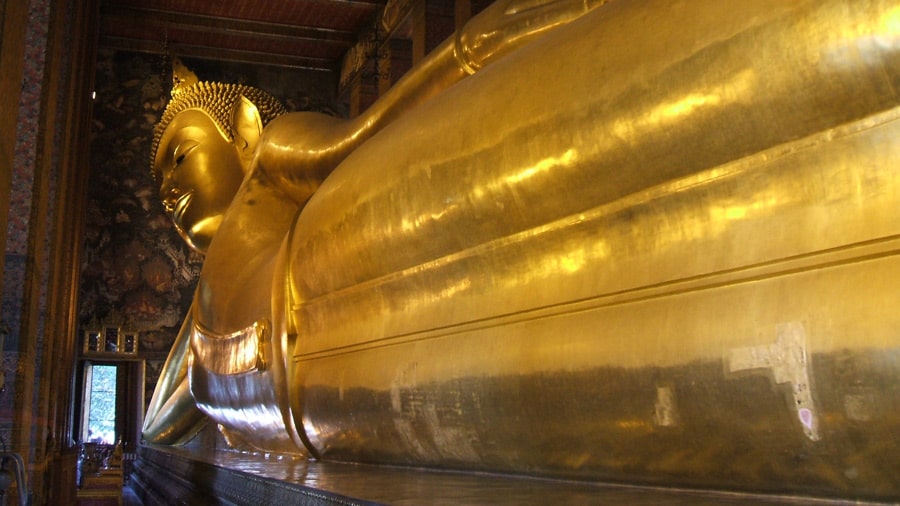
The Reclining Buddha is the main focus for most visitors, measuring 46 metres long and 15 metres high and filling much of its hall. Look beyond its gilded surface to the feet, where mother-of-pearl inlays depict 108 auspicious symbols associated with the Buddha. This part of Wat Pho can become crowded, but the experience changes once you move into the wider compound, where paths lead between chedis, courtyards and active religious buildings.
Why Visit
- See the enormous 46-metre Reclining Buddha and the intricate mother-of-pearl work on its feet.
- Explore a substantial temple complex rather than stopping at a single Buddha hall.
- Look closely at the ceramic decoration and architectural details of the chedis and courtyards.
- Discover a site with roots predating modern Bangkok and strong connections to the early Chakri kings.
- Learn about Wat Pho’s longstanding role in preserving and teaching traditional Thai medicine and massage.
How to Get There
Wat Pho is at 2 Sanam Chai Road in Phra Nakhon, immediately south of the Grand Palace. The MRT Blue Line is one of the simplest ways to reach the area, with Sanam Chai station providing convenient access on foot. Taxis and Grab are practical from other parts of Bangkok, although traffic around the old city can make road journey times unpredictable. Travellers using the Chao Phraya Express Boat can use Tha Chang or Wat Arun and continue towards the Wat Pho area by the appropriate river crossing. Parking is available on Chetuphon Road at 20 baht per hour.
Where to Stay Nearby
Bangkok’s old city and riverside areas are the most convenient bases for visiting Wat Pho, particularly if you plan to explore other historic sights in the same part of the city.
Rattanakosin
The most practical area for exploring Wat Pho and the surrounding historic district on foot. It suits travellers who want to start sightseeing early and keep journeys between the old city’s main sights short.
Riverside
A useful base if you plan to use Chao Phraya boats during your stay. Convenience varies along the river, so areas with straightforward pier access are the most practical for reaching the old city.
Chinatown
A good alternative with MRT connections towards Sanam Chai and easy access to another distinctive part of central Bangkok. It works particularly well if Wat Pho is one of several areas you intend to explore rather than the sole focus of your stay.
Good to Know
- Opening hours: Wat Pho’s dedicated visitor information currently lists 08:00–19:30 daily. Some other pages on the official temple website give an 08:30 opening, so there is a minor inconsistency in the published information.
- Entrance fee: 300 baht per foreign visitor. Thai nationals enter free with valid Thai ID, while children under 120 cm are admitted free. Prices may change.
- Dress code: Visitors are expected to dress politely and respectfully. Wat Pho specifically states that women should not wear shorts above the knee.
- Temple etiquette: Shoes must be removed before entering religious buildings. Women should not make physical contact with monks or novices.
- Traditional massage: Massage is available within the Wat Pho complex. Current published prices start at 340 baht for 30 minutes, while a 60-minute traditional Thai massage is 520 baht. Prices may change.
- Typical visit duration: Allow around 1–2 hours for the Reclining Buddha and a worthwhile exploration of the wider temple grounds.
TTH Tip
Spend a few minutes looking closely at the Reclining Buddha’s feet before moving into the wider compound. The mother-of-pearl panels are easy to overlook when the hall is busy, and the courtyards beyond the main attraction generally give you more space to appreciate Wat Pho’s architecture.
FAQs
How much is the entrance fee for Wat Pho?
Foreign visitors currently pay 300 baht per person. Thai nationals with valid Thai ID enter free, and children under 120 cm are also admitted free. Prices may change.
What time does Wat Pho open?
Wat Pho’s dedicated visitor information currently states 08:00–19:30 daily, although some other pages on the official temple website give an 08:30 opening.
What should I wear to Wat Pho?
Dress politely and respectfully for an active Buddhist temple. Wat Pho specifically states that women should not wear shorts above the knee, and shoes must be removed before entering religious buildings.
Can you get a traditional Thai massage at Wat Pho?
Yes. Wat Pho has a longstanding association with traditional Thai medicine and massage, and massage services are available within the complex. Current published prices start at 340 baht for 30 minutes; prices may change.
How long should I spend at Wat Pho?
Allow around 1–2 hours to see the Reclining Buddha and explore the wider temple compound without rushing.
Map & Directions
Sorry, no records were found. Please adjust your search criteria and try again.
Sorry, unable to load the Maps API.
Booking Transport
Compare buses, trains, ferries, and flights for popular routes across Thailand. Prices and schedules are updated in real time.
Booking Tours & Activities
Browse and book popular tours and activities in this destination, with instant confirmation and flexible cancellation options.